
Friday, July 28, 2006

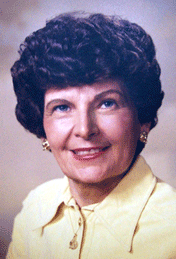
Caroline Livermore


The late Caroline M. Livermore of Lumberton, N.C. was a woman of vision, perseverance, and determination, who founded Caramore in the early 1970’s. She had a son with mental illness who was not debilitated enough to require lifetime institutionalization but not well enough to function independently. He became the first Caramore client and to this day is living successfully on his own in Chapel Hill. With great determination to provide community based services to individuals with severe mental illnesses, she sought funding from the legislature and other places to begin Caramore, which was initially called the North Carolina Association of Emotionally Troubled, Inc. (NCAET, Inc.).

The first group home in North Carolina for people with severe mental illnesses—Ephesus Group Home in Chapel Hill—was established under her leadership in 1976. Caroline surrounded herself with people of like mind and perseverance to formulate the early composition and backbone of the successful operation that Caramore is today.

After her untimely death in 1985, Caramore continued, grew, and prospered. Caramore is currently under the leadership of CEO David Chapman, together with dedicated individuals serving on the Board of Directors and as trained program staff.

Milestones

· 1974—Study group formed to begin the North Carolina Association of Emotionally Troubled.

· 1976—First group home in N. C. for mentally ill established in Chapel HillEphesus.

· 1985—Move from borrowed facilities on University property to highway 54 location in Chapel Hill.

· 1985—Second group home established in Chapel Hill—Fountain Ridge.

· 1987—Beginning of semi-independent apartment cluster program at Carolina Apartments in Carrboro.

· 1990—Received national accreditation (CARF). Continuous reaccreditations every 3 years.

· 1995—Move to new Administrative and Operations Center facilities in Carrboro.

· 2001—Beginning of Tier 3 Program for continued long-term support for adults with mental illness.

Sunday, July 23, 2006

Elaine Cummings: 2006 Social Worker of the Year

Caramore is very proud to announce that our very own Elaine Cummings, MSW, LCSW, has won The National Association of Social Workers North Carolina Chapter’s 2006 Social Worker of the Year.

Read a very nice bio here… and congratulations!

Saturday, July 22, 2006

Will I lose my benefits?


Will I lose my benefits?

Coming to Caramore involves working and earning wages—which raises the question “will I lose my benefits if I work?”

The answer to that—in the vast majority of cases—is no, you will not lose your benefits. Caramore works to maximize your total income, while being attentive to a variety of variables—number one being your health. This means carefully balancing your wages while being completely aware of the way they affect your benefits. We make you aware of the rules and provide you with valuable counsel.

The purpose of Caramore—beyond just working—is to enhance all areas of your life. We want your life to be better, and keeping your benefits is at the top of the list.

In most cases (whether it be concentration, stamina, &c.), mental illness only allows you to work part time. The Social Security Administration recognizes this important distinction between the ability to work part time and full time. Working and earning wages under $860 gross a month (SGA) because you simply can not handle more, legitimately allows you to keep your monthly Disability payment for as long as you remain medically disabled[i].

In addition, SSA wants you to work. They offer many incentives for you to try to return to work—in some capacity —safely, with no threat to your benefits[ii].

Virtually all of Caramore clients who have SSDI (Disability) and come to Caramore end up working in the community part time and therefore keep their monthly SSDI.

Working part time and keeping your SSDI can go on indefinitely. Once in awhile, a client whose health has significantly improved might choose to go off their benefits and work full time, but this is rare.

But what about SSI (Supplemental Security Income)? SSI is designated for the neediest and is based on an equation that lowers the payout as wages increase.

Some examples of the equation in action:

· SSI pays out $579

· If at Caramore making $5.25 an hour for 30 hours a week (about $630), SSI payout should be around $300 a month (unless you also have SSDI or an overpayment or there could be some other variable) making your total monthly income around $930 (before taxes).

· If you landed a job working $9 an hour for 30 hours a week, you would gross about $1080 a month and receive about $60 in SSI for a total of $1140.

· If, on the same job working for $9 an hour, you were to work 40 hours a week, then you would gross about $1440. You would not be eligible for any SSI but look at the vast difference between $579 and $1440.

SSI is undeniably helpful in providing essential survival money to our neediest clients, but if your health improves, and if you were to be successful with Caramore in improving your job-ready-skills (both soft and hard), then more money is to be had by earning wages.

Of course, the real value of getting SSI is getting Medicaid along with it. If you are granted SSI then you are automatically granted Medicaid. If you have a mental illness, SSA has a nice little rule (1619B) that allows you to keep your Medicaid even when your wages grow to a point that your SSI payout is $0. Caramore takes advantage of this rule frequently.

Some of you were granted Medicaid through Social Services, not SSI, and this is a benefit area that is a concern, because the threshold Social Services allows in wages and SSDI is low[iii].

In cases where a client’s Social Service Medicaid (or any form of healthcare) is lost, Caramore aggressively turns to other outlets for healthcare and prescription medication coverage—such as the very generous UNC Hospital indigent pharmacy and hospital assistance. Caramore will always find you an alternative. Caramore always finds a way to get you healthcare coverage.

The initial visit to Caramore is the perfect time to discuss—either you or your support people—the question “will I lose my benefits?”

Caramore cannot remove all risk inherent in you beginning to earn more money. However, we guarantee to help you navigate wisely the whole process of taking on your illness, attempting to be healthier, and going back to work. We are here to maximize the whole experience to tilt the odds in favor of your success.

-D. Cooley


[i] You will not be medically reviewed for as long as you are in our VR funded program either.

[ii] A nine month trial work period allows you to work and earn wages (regardless of how much) and still receive SSDI. After you burn the nine months up, a 36 month period of extended period of eligibility begins that functions like a light switch. If you gross over $860 in a particular month, you are not entitled to your benefit that month, but will be the next (if you earn under SGA). After 36 months, grossing over SGA will shut down your SSDI. Read the rules yourself…

[iii] $817 is their threshold. They take your gross income, subtract by $65 and divide by half. If you have SSDI, they subtract $20 and add that to the total. If that number is over $817, then you could lose Medicaid.

It is worth mentioning here that there are many other variables, restrictions, and rules that they consider when deciding eligibility—the general point here is that this type of Medicaid is reserved for the neediest and it is hard to keep as your earnings increase.


Caramore Hires Successful Clients

The work our clients do on our cleaning crew and lawn crew when they first arrive is real work. Both crews have real production quotas and customers to please. Performance and quality must remain high to compete in the Chapel Hill area.

On these crews, and after our clients have mastered both hard and soft skills, they move on to other jobs in the community.

However, occasionally, we hate to see certain performers go and we hire them on permanently.

These past clients and current employees are valued for their duel roles of both workers and mentors. Their insight, understanding, history, and levels of achievement inspire current clients.


Clients turned employees... the number continues to grow


Friday, July 21, 2006

Jonathan


Good news--this week Jonathan passed his GED. This has been a long time in the making and he has really worked hard for this.

Now he's employed at UNC Animal Lab, has his own car, has his GED, and
is ready to apply for full time employment at UNC. He also plans to move
into his own place in August.

Great job Jonathan!