Tuesday, September 20, 2011

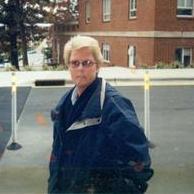
Introducing... Victoria de Ney


Before the road to Caramore intersected with my life, I was one of the most critical people you’d ever meet…
 
In Tier 1, I spent most of my free time hiding in my bedroom, silently criticizing everyone and everything in my head. My ego and I in particular seemed to have "bull's eyes" for me to throw darts at. If you met me back then, I would’ve zoomed in on your faults and ignored your talents!
 
In Tier 2, my best friend and roommate (a Caramore graduate who is now one of Caramore’s best RAs!), encouraged me to “get out of my shell.” So I hung out with her in the med office (a great place to meet other clients, by the way), where I met and connected with new friends. I became more social and less critical, somewhat, at this stage.
 
In Tier 3, I was cruising past the speed limit one last time, crashing my criticism directly into a club I didn't approve of and Caramore accommodates. As soon as Caramore helped me change the oil in my "car" (outlook on life), I finally realized how negative my thoughts were. I'm now mentally insured by a company called "Happiness"! (And it's been over 3 years since I experienced my second, and last, involuntary hospitalization and hallucination).
 
It was then (Tier 3) my new life-changing attitude allowed Caramore to piece its way into the big puzzle that is me! And so my relationships within the Community have been renewed.
 
Thanks to the new "leash" on life Caramore gave me, I’m:
 
1). now a member of NAMI. Caramore encourages clients to explore mental health issues outside our close-knit Community!
2). hopeful I can contribute to the fight against stigma! I openly discussed my schizoaffective disorder during my latest interview and my employer told me the disorder runs in her family (I even told her Caramore is the reason I'm prepared for the interview!). She hired me on the spot!
3). more intuitive! Along with my therapist (and my mother the social worker!), Caramore taught me to follow my intuition and to speak my mind (positively!).
4). more financially savvy. Caramore (and a businessman for my father!) inspired me to follow the daily budget I created, with Scott's help!
5). a Parking Monitor for Special Events at UNC, a really fun job Barry referred me to!
6). no longer afraid to venture outside my own city, by bus! Caramore taught me how to navigate the bus system.
7). discovering who I am, who I'm not and what my passions are! Caramore promotes only the best in us. 
 
If the above sounds like I'm bragging, well, I am! Caramore worked hard with me (not for me!) to get where I am now. As a result, I'm finally happy with my identity and I'm happy to be alive!
 
"Bark,"
Victoria de Ney

Monday, August 01, 2011

Caramore uses the UCSD Performance-based Skills Assessment

Upon admission, Caramore currently uses the standardized UCSD Performance-based Skills Assessment, which is extremely useful for determining everyday functioning in severely mentally ill adults and helps us specialize in treatment plans for individuals.

Please feel free to contact Jacob Long ((919) 967-3402 extension 100, jacob.long@caramore.org) with any questions on our use of the UCSD Assessment or any admission questions.

Thank you.

Tuesday, July 12, 2011

Madison Summarizes Schizophrenia

I was approached by a Caramore staff member and they asked if I would be willing to publish my story for the Caramore website.  I pondered on it long and hard and finally decided to do it. But I also struggled with what to write. And I have decided just to give it straight.


If I was to sit here and tell you that living life with schizophrenia is easy I’d be lying. In fact each day is a struggle to live life as normal as possible. Unlike the average person there are strict medicine regimens which also include getting blood work done every week, therapist appointments, counseling sessions, meetings with vocational rehab and so on and so on. These are things that most humans may never see in there lifetime but as a person with mental illness this is LIFE.
Along with the everyday struggles of my mental illness I also work 30 hours a week in the culinary field. Not only do I have a life altering illness I also work in one of the most intense, and mentally demanding fields known to man. And to be honest If I had never found the culinary arts I would probably be dead.  But now, not only am I conquering my mental illness I have also found a new lease on life and that lease comes in the form of working with food. Yes I get tired, and yes some days I want to quit but it is in that moment that I recall all of what I have been through with my mental illness and life itself  and I see where I have come from and where I am going and I find the strength within to keep pushing.
In saying that there is no way that I could have accomplished this all on my own. In fact If I hadn’t have found the people at Caramore I would be doing just good enough to get by, BUT I wouldn’t be doing great like I am today! The Caramore program has added tons of help on getting me to the point that I am at today. The greatest thing that I have found with being in the Caramore program is that the staff helps you out tremendously but they DO NOT do the work for you. They make you strive to find ways to overcome your illness and also help on ways to becoming a functioning member of society.
Like I said to begin, living life with mental illness is an ongoing process that takes time and effort to overcome. It is not conquered in a day, a week, or a year, it is an uphill battle your whole life. But with the help of the Caramore staff and the dedication to overcome your mental illness anything is possible!

Madison

Monday, May 30, 2011

Remembering Steve Powers


Steveo and Chubby
Caramore friends and family lost one of our own—Steve Powers—who abruptly passed away May 3, 2011, leaving us confounded in that senseless way that profound losses leave us.

Steve struggled and suffered and persevered and eventually etched out a life with a wonderful sense of self-awareness expressed through irony. He relished absurdities and long ago dropped any desire to take what happens in life as  personal.

He was filled with humor and belly laughs and specialized in shtick-driven voicemails that he would leave on my phone, and purposely cloddish pencil-cartoons on notebook paper all folded up and mailed to me at my home.

Steve was a mainstay in the kitchen of Carol Woods Retirement Community, working there for almost ten years, but he always told me he really should have been a weatherman. He fed me leading-edge weather science and predictions for long time—in fact, when I told my nine year old daughter of Steve’s passing, the first thing she asked was how I was going to get my weather forecasts.

Steve was a pleasure to know as a friend, and I appreciate having known him, and miss him… 


David E. Cooley

Sunday, April 17, 2011

Our Community


Important News! Beginning July 1, 2011, Caramore Community will no longer provide any of its residential services in what has traditionally been regarded as typical "group home" settings. 

Instead, Caramore will improve the level of service to its clients by incorporating all of our residential services within a community of four bedroom supervised apartments, thus providing a more normalized community environment for all of the Caramore program residents.

Supervision, guidance and support for residents will consistently be provided in direct relation to an individual client's needs, and personalized plans and goals will be set up before each individual is admitted into the Caramore program

This represents a progressive shift in the way we offer our services and places and increased emphasis on a more person-centered approach to success and achievements for each resident.

Caramore staff and clients welcome this change as it reinforces our mission to help all our residents be fully integrated in the general community as they enter our program, and not feel isolated in a group home environment while working on their individual goals.

The overall affect will be a more unified program, less separation of clients in homes, and more exposure of all residents to all staff and fellow clients.

Barry Shanley
Program Director

Saturday, February 26, 2011

Our Annual Campaign—2011


We are so grateful for the tremendous amount of financial support we received from our loyal donors last year, and we hope that this year will be just as wonderful.  Because of the contributions we received over the past year, we have been able to kickoff a 5-year plan to purchase a condominium for our long-term clients.  Amazingly, $14,086.00 has already gone towards the purchase of one 4-bedroom condominium at University Commons in Carrboro, and as a result we have been able to vastly improve the lives of four individuals living with severe and persistent mental illness.  Why is this so important?

Because of the recurring difficulties individuals living with mental illness receive over time, we developed a program called Tier 3; this is where our condominiums come into play.  Caramore clients that have exhibited an ongoing dedication to their recovery, and that have traversed the group home and supervised apartment setting of our program, may desire a long-term, close relationship with us.  In that case, they enter into Caramore’s Tier 3 program.  Sometimes these very clients have had legal troubles or credit issues, and find it difficult to get an apartment of their own, despite positive financial and behavioral changes they have enacted in their recovery.  We are able to get around these practical barriers by having our Tier 3 clients sign a year’s sublease with Caramore at our condominium, and receive continued assistance with problem solving and job counseling.  Most importantly, our Tier 3 clients see an immediate improvement in their life, and they are so appreciative for the comfortable environment that University Commons offers, allowing them a “peace-of-mind.” 

Let’s make it our goal to extend this opportunity to more Caramore participants by purchasing another 4-bedroom condominium in the next 5 years.  We all know the effect that lack of funding has had on mental health providers, but Tier 3 offers us the ability to have a stake in owning residential treatment that can really last.  If we receive $30,000 a year over the next 5 years, then the possibility of ownership can become a reality.  Let’s double our efforts from last year, and by doing so, provide progressive, life-enhancing, long-term services for our clients.  Please help us assist more clients enter into Tier 3 by making a tax-deductible donation or pledge this year so that we can sustain and expand life-enhancing services to those living with severe and persistent mental illness.  Thanks for your commitment to those living with mental illness, and your financial support in helping us, help others, achieve their goals. 

Sincerely,

David Chapman
President/CEO    

Monday, December 27, 2010

A Letter From a Mother

As a Mother of a child with mental illness I’ve had to deal with a lot of struggles with J. for a very long time.  At the time of his very early diagnosis I was married but in a situation that I found myself dealing with this alone.  Family didn’t understand and I had very little knowledge as to how to handle and work through those many daily struggles.  After the first hospitalization, that almost did me in, I knew the answer to some of my questions as to what J. was going to be dealing with the rest of his life so my first step was to learn all I could about his illness.  Books, questions to the doctors, and even a little internet research helped me to gain a better understanding of what I was dealing with and the struggles J. was going through.  Of course over the following years we had other hospitalizations but each time we learned more and gained a lot of valuable information.  For me this was a team effort that I knew J. and I were going to have to work through TOGETHER!  Many days I felt I was losing the battle to help him and then other days I felt we were getting the tough work done. I knew there were many great groups out there to offer support but it was a struggle for me to reach out to them and most of the time I was just too exhausted to do it!

As J. got older and bigger in size he started to become more difficult to handle.  I knew as a family, me and his sister especially, were struggling with the all time consuming energy to get through a day and even an hour with J.  My problems with his father were getting worse and it was just getting too much to handle all alone.  For so long though, and still today I see it, people just do not understand what you go through unless you have to walk in those steps but still it was hard to reach out to family.  At this point I started looking for some kind of inpatient placement for J.  We went into one program for about a year but J. was moved from house to house and he did not respond well at all.  J. came home and soon afterwards went into the hospital to stabilize meds and his mood swings.  I reached out to one more program at the age of 16 and he went to live in a wilderness style program for boys.  I couldn’t believe I was putting my child into a program that was so strict and lacked so many of the things we take for granted everyday.  He struggled in the beginning, as to be expected, but gradually started responding to all the various things put into place for this to be a success for each young man there.  J. came out of there at 18 years old a much better person.  He had learned to talk through his anger and learned to control his outburst.  Was he perfect, no, but he learned very valuable skills there.  He was a different person.  The one thing he didn’t learn though was how to start managing his life on his own… to be more independent and to make better choices as an adult.  After about 6 months, I felt J. needed to go somewhere that could teach him some life skills: paying bills, managing money, cooking for himself, independent but monitored, etc.  I had tried this at home but as every parent can say our kids always think they know a little more than us at that age and he was not interested in his mother trying to tell him what to do.  So we went to a new placement for independent living.  This became a disaster and my nightmare in real time!  He stopped taking meds as needed, spent all his money, was easily manipulated by peers and learned hard lessons about trust. There was no tiered program to learn this stuff, just thrown out to the wolves so to speak.  I, as his Mother got no support from the program and was basically told to mind my own business.  J. become his own worst enemy and was told he had to leave the program.  I felt they gave up on him after not helping him as this “new” program has promoted itself to do.  I was given 10 hours notice to move him out and all of his belongings.  What an experience!  This caused J. to withdraw and didn’t believe anything or that anyone cared enough to help.  Again, back to the hospital to stabilize medicine because he had been off of them for so long and he was depressed and was having problems but also back to the beginning of reminding him of all he had accomplished at the wilderness program.  Thankfully, J. had retained enough that he bounced back fairly quickly.  J. spent the next year at home with family but just had no motivation to do anything with his life because we as a family had made it too easy for him.  I started trying to find something or somewhere that could teach him what he was so resistant to do at home.

Now I come to Caramore! I stumbled over the website one day and started doing some research about the program.  I made a few phone calls.  Then I approached J. about Caramore.  He was so resistant but after a few talks decided to look into “that place”…as he called it.  We started the application process and worked with Jacob Long.  I took J. for a tour and he listened to everything Jacob told him.  J. told me afterwards that Jacob was so cool and seemed to get him and what he was saying and feeling.  I breathed a sigh of relief!  After some time we got notice that J. had a spot to move into and we started preparing for this.  J. was scared and nervous because he didn’t want to be lied to and believe in”these people”.  I was nervous because I had to trust strangers to do right by my child, though he was an adult.  I took J. and dropped him off.  While J. did struggle a lot to begin with, he also loved it.  He enjoyed the people he lived with and started working a real job and grew to love that too!  After a couple of months I saw progress with him.

I am under no illusions that all is perfect in J.’s world and he has his moments of struggles but the staff at Caramore has been able to help him through all of this.  J. will always have struggles but the staff helps him work through that.  He has made friends that maybe have the same struggles and can relate to him.  I have made many phone calls to Barry to help me out with concerns I had and he has always been patient, kind, considerate and very understanding.  I have never felt excluded from J. and his needs and how to help him.  Many people behind the scenes have worked with my son to help him be more successful and help him out with the guidance he needs when he struggles.  J. is very stubborn but Caramore never gives up and always give him what he needs, though sometimes he may not see it at the time.  I have felt Caramore has always had J.’s best interests at heart.  He has grown in so many ways and I give him credit for his hard work and determination but I also give credit to Caramore.  Caramore has helped our family finish what others have started with him.  The wilderness experience taught J. better ways to deal with his anger, his family has taught him how to love and know we are there for him good and bad but Caramore has taught J. to be a productive young man in today’s society.  Caramore opened up doors for him that he never thought would open.  They showed him how to use his strengths but to also how to work on his weaknesses.  J. has worked hard and sometimes wants to give up but Caramore NEVER gives up on him.  Caramore continues to show J. how great he can be!!!! 

As a Mother, I would always recommend Caramore to anyone I saw going through similar struggles with a family member.  I also thank God for leading me to a program that has helped my son so much and has never given up on him even during his hardest struggle.  Mental illness affects not just the person but the whole family and Caramore helps keep the family involved as much as possible.  Caramore is a team of people…some we see and some we never hear about but I am so very thankful for each of them.  

With gracious thanks always,

Christina 

Sunday, December 19, 2010

A Friend Leaves Us

A Friend Leaves Us...

Dianne Swearingten, a true friend of the Caramore family, passed away on December 12, 2010. Dianne was responsible for providing many Caramore participants with meaningful employment opportunities through McLaurin Parking at UNC Hospital in Chapel Hill.

But it wasn't just the opportunities for work that we are indebted to Dianne for ... it was for her insight, her support, and her tireless belief that people with disabilities could work effectively and be successful in the community.

Dianne championed many of our clients over the years, sticking with them when necessary, and helping them to realize their potential.

We are saddened by her leaving us, but we cherish the memories of of our relationship.

Bless you always Dianne.

Barry Shanley
Program Director ... and grateful friend

Friday, December 03, 2010

Anthony

A Snapshot of Anthony and his talents ... Anthony's intelligent mind is always at work, as evidenced by some of his many sketches and cartoon drawings. Anthony has a kind demeanor that is both humorous and yet also serious at the same time, a creative combination that is always enjoyable and disarming for all of us

Anthony has been at Caramore for several months now and has been working at a job in the community that he truly enjoys. He plans to continue working for awhile and then pursuing courses in art school

Anthony's simple sketch about "crossing the bridge" resonates with all of us at Caramore --- it truly represents the mindset and effort of everyone in the Caramore Program.

Enjoy  
Barry Shanley
Program Direc
tor

Saturday, November 27, 2010

Thanksgiving Wishes

Thanksgiving is a special time for us, an opportunity to reflect and give thanks for all that we hold dear. In that spirit, we at Caramore would particularly like to express our heartfelt gratitude to you for the support and generosity you have shown for our program. For almost 35 years, the mission of Caramore has remained steadfast --- to empower adults with mental illness to live productive and satisfying lives. Caramore continues to accomplish that mission by providing housing and job opportunities within an environment that respects the dignity and potential of all adults who live with mental illness.

In reality, carrying out this mission is quite challenging. It is only through the special help and generosity of individuals such as you that we have been able to see hundreds of our clients achieve their goal of independent living.

While the heart of Caramore lies in its dedicated staff, a large measure of our success is a direct result of the impressive level of commitment that you and others have shown through your efforts. Your dedication and support helps create a significant part of the environment that empowers our clients to help themselves. You help demonstrate to our clients that they can live rich and rewarding lives with mental illness --- that there is nothing to deter them from fulfilling their dreams. Without your involvement and personal commitment, many of the Caramore participants might never realize their dreams of independent living.

It is with great joy and sincerity that we thank you for your generous and concerned help. Your spirit and support allows us to carry out and continue the important work that we do. You are truly very special to all of us.

Thanksgiving blessings to you and your families,

David Chapman & The Caramore Staff

Tuesday, November 09, 2010

FRANK Gallery Salon: Brushes with Life: Art, Artists, and Mental Illness


On Thursday, November 11; 6:30PM at the FRANK Gallery (109 E. Franklin St., Chapel Hill), the TGI Thursday Salon will offer community members, professionals, artists, and mental health consumers an opportunity to engage in conversation about how art and mental illness interplay as part of the creative process, and as part of the recovery journey. Select pieces from theBrushes with Life exhibit will be on display and remain for the Second Friday Art Walk on Friday, November 12; 6:00-9:00PM.

Brushes with Life is a creative arts program open to people with schizophrenia and other mental illnesses through UNC’s STEP and OASIS clinics in the Chapel Hill area. By connecting with the larger community though their work, artists promote a broader understanding of the human side of mental illness. For more information check out: http://cecmh.org/center-in-action/specialized-programs/brushes-with-life/ or http://www.frankisart.com.


Brought to you by the Healthy Carolinians of Orange County Mental Health and Substance Abuse Committee to raise awareness of the challenges and contributions of people with severe and persistent mental illness in our community.


Additionally, they hope to engage members of the community in supporting and expanding the Mental Health Association in Orange County’s Compeer Program, a project that fosters supportive friendships between people with mental illness and volunteers.

Monday, September 20, 2010

Social Security and You


Whether you already receive Social Security benefits when you enter Caramore or want to apply for them while you're here, we can help.

Here are a few facts. There are two types of benefits, Social Security Disability Income (SSDI) and Supplementary Security Income (SSI). SSDI provides benefits to blind or disabled persons who are "insured" based upon FICA contributions, while SSI provides benefits to low income people who are disabled, blind or elderly.

Many of Caramore's clients receive or are applying for one or both types of disability. Those who receive SSDI will also receive Medicare two years after the date they became eligible for SSDI. Those who receive SSI automatically receive Medicaid.

Some common myths:
  • everybody is denied the first time
  • most people are denied three times before they're approved
  • if you work, you'll lose your benefits
In fact, assuming you are disabled for purposes of Social Security law, your chances of being approved the first time you apply are very good if your case is presented properly.

Also, while SSDI and SSI calculate your "earned income" differently, each allows disabled individuals to work part time. In fact, each program encourages its recipients to work. Caramore's mission is to, among other things, find employment in the community for its clients. It could not do so if Social Security prohibited or otherwise penalized its recipients from working.


Caramore helps those who are seeking benefits navigate the sometimes complicated application process, and it helps those who are receiving benefits understand the rules that apply to them concerning work, Medicare and Medicaid. The interplay between these social services can be overwhelming; it's comforting to our clients and their families to have Caramore there to help with the issues that arise inevitably.

Scott D. Zimmerman
Financial and Benefits Counselor

Friday, September 17, 2010

Caramore is...

  • Caramore is an established psychosocial treatment for mental illness; once stabilized on medication, Caramore provides individuals with a warm and comfortable community environment to form and keep relationships; where work, health, and continual practice of confronting the everyday challenges of life can be achieved and maintained.
  • Caramore has 30 years of success in rehabilitation emphasizing social and vocational emersion—we offer immediate work and continual job counseling, money management counseling, and transportation; all of which adds up to mastering and keeping employment.
  • Through our structured program, individuals are more likely to keep taking their medication and less likely to relapse or be hospitalized. The program—and work with therapists—combine to allow for a better understanding of how to best live with mental illness and its common yet individual symptoms.
  • Caramore residents take an active role in managing their illness and can better make decisions about their own care, be very aware of their persistent symptoms, and have a plan to respond to early warning signs of possible relapse, typically preventing it.

"Unlisted: A Story of Schizophrenia"


Sponsored by NAMI Durham   Free to the public
October 13th at 7:30 pm
Cinema One
309 W Morgan St., Durham

Director Statement...


For years I felt conflicted about having disconnected from my father. I told myself that
without my contact information my dad would no longer be tempted to come searching
for me in a psychotic state, and I could avoid the pain of not being able to get him help.
Five years ago I decided to stop hiding. Part of the catalyst for this decision was my
growing need to tell my story; a story that while unique in its details is universal in its
themes.
Severe mental illness tears families apart, but not for the reasons that make tabloid
headlines. Yes, the symptoms of these illnesses can be devastating, but what really tears
families apart is their inability to get treatment for their family member. The frustrations
and heartache that comes from not being able to get care causes thousands of family
members to disconnect. Over the years, the films I have seen about mental illness, have
portrayed devoted caretakers, but I had a need to expose the other side of the story,
family members who are themselves deeply conflicted by the realities of deciding not to
care for an ill family member.
Not only was I propelled to give a new voice to family, but also to give a more typical
picture of someone suffering from severe mental illness. The stories we hear in the media
focus on a few famous individuals (Van Gogh or John Nash, for example) or a few
notorious ones (the rare, but terrifying person shooting at strangers). My dad, on the
other hand, represents the more common face of mental illness; a regular guy who
wanted a career and a family, but was constantly stymied by his disordered thought
process.
With Unlisted I wanted to give viewers a background on why getting mental health
treatment is so difficult. My hope is that this knowledge will not only help viewers
understand why so many people sit untreated on our streets, but why things do not have
to stay this way. I hope that viewers will have a foundation from which to take action; be
it simply taking a moment to validate the existence of someone living on the streets or
working to create a more functional and compassionate mental health system.
Finally, my hope is that after seeing Unlisted viewers will be more motivated to discuss
mental illness, for if it is not present in their own family, it certainly is present in a family
of someone they know. Greater than any statistic, what most reminds us of the
prevalence of mental illness, and the obstacles to treating it, are these conversations.